Skip to Content Skip to Navigation

SOMTOW: Home

CLICK TO GO TO • SOMTOW'S BLOG •

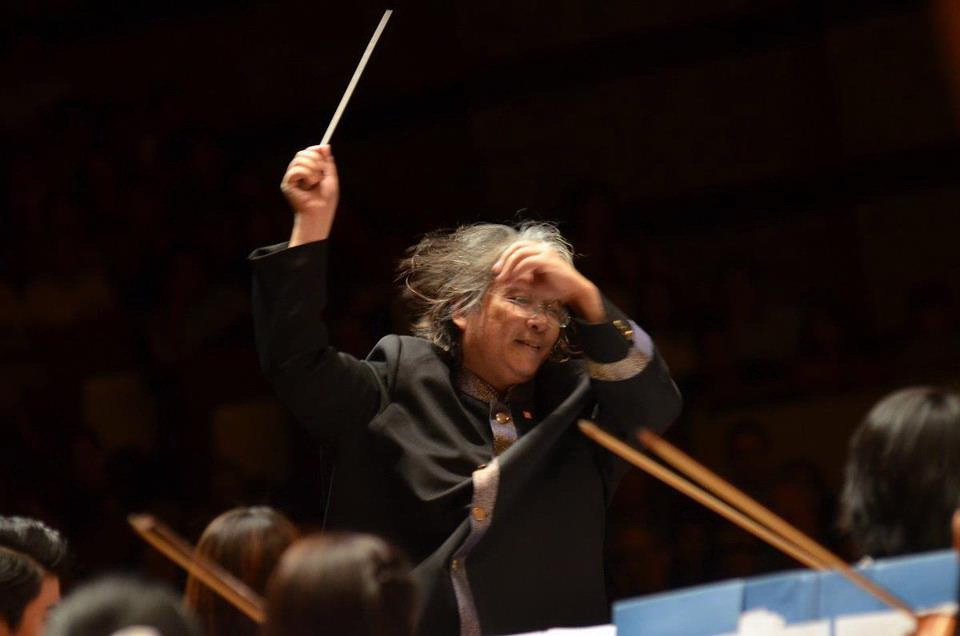
Welcome to the new official website of Maestro Somtow Sucharitkul -- the artistic director of the

Bangkok Opera and Siam Philharmonic Orchestra!

Click to read the entire text of Somtow's groundbreaking SEAWRITE AWARDS KEYNOTE SPEECH.

Somtow's infamous "Serial Killer Sonnets" are now back online at this site!

Somtow's new opera, AYODHYA - pics and sound clips, including Michael Chance's astonishing interpretation of "Ganesha's Aria" and the controversial Death Scene of Ravan!

Here's Michael Chance in the role of Ganesha!

It's crazy but Somtow has a new ART SHOW opening in Bangkok!

New: An Annex to Somtow.com with more pix! Click here!

New: BANGKOK OPERA MEDIA CENTRE: pix from Somtow's productions, movie clips, and reviews!

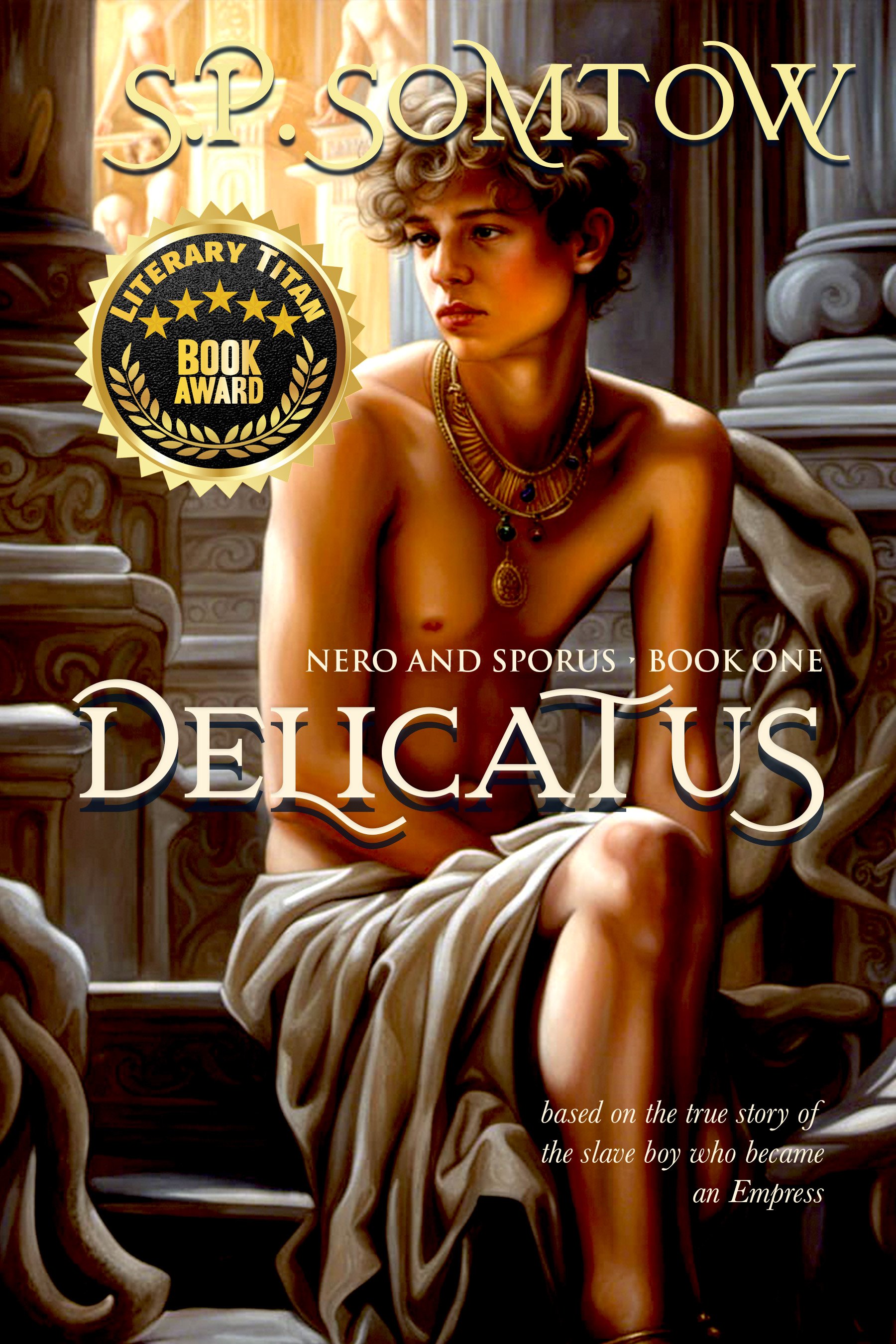
Somtow Sucharitkul's "dark twin," S.P. Somtow, award-winning author, has his own separate area which can be reached through the Terrifying Thai page.

Pictures and reviews from Somtow's latest productiom, DAS RHEINGOLD!

BUY SOMTOW'S BOOKS by clicking HERE!

And get your copy of Somtow's latest book, "Other Edens", by clicking below.... and "The Shattered Horse" is back in print as well as a 21st anniversary edition of Vampire Junction. Also, you can now buy Somtow scores from Amazon: Click below.

While you're here, please check out the new service provided to all classical music lovers in Bangkok, THE ULTIMATE CLASSICAL CONCERT CALENDAR

Here's another clip, this time from the 2006 production of "Cosi fan Tutte" conducted by Somtow

Pix from the new AIDA can now be seen HERE!

AIDA and other DVDs now available from the BANGKOK OPERA GIFTSHOP!

The AIDA DVD is also available from FILMBABY!

SEAWRITE AWARDS

report from the Bangkok Post

HSH Prince Bhisadej Rajani presides over SEA Write Awards night

SANITSUDA EKACHAI

He promised that it would not be boring. And writer/musician S.P. Somtow kept his word as he stood in as keynote speaker for this year's SEA Write Awards on Monday evening at The Oriental.

The original speaker, Nigerian playwright and Nobel laureate Wole Soyinka, declined the invitation at the last minute to protest the September 19 coup in Bangkok.

In a speech filled with passion, Somtow Sucharitkul, who writes under the pen name of S.P. Somtow, chastised the West's condemnation of Thailand's bloodless coup. He also talked about how a childish and silly poem that he wrote at the age of 11 became adored by Shirley Maclaine, who used the poem as an epigraph in her book Don't Fall Off the Mountain, taking it as ancient Eastern wisdom without knowing it had been penned by an 11-year-old boy.

The prolific and award-winning novelist shared with the audience, with some tears and laughter in between, his long journey to find his identity as a writer and a musician in the Western world before he finally came home - and his belief in the artist's mission to say things that must be said, to look unflinchingly into the hearts of men and to tell the world the truth that you find there, and to dare apprehend the truth differently from the West.

In its 28th year, the SEA Write Awards night to honour literary talents in Southeast Asia was presided over by His Serene Highness Prince Bhisadej Rajani on behalf of His Royal Highness Crown Prince Maha Vajiralongkorn and Her Royal Highness Princess Srirasm.

This year's winners were Sawal Rajab from Brunei; Vannarirak Pal from Cambodia; Sitor Situmorang from Indonesia; Douang Bounyavong from Laos; Jong Chian Lai from Malaysia; Victor Emmanuel Carmelo D. Nadera Jr from the Philippines; Isa Kamari from Singapore; Le Van Thao from Vietnam; and Ngarmpun Vejjajiva from Thailand.

Interestingly, each awardee touched on the same theme in their acceptance speeches: the magic of words to turn the world upside down, as Vannapirak Pal put it; to describe deeply and sophisticatedly the human soul, said Le Van Thao; to redeem humanity in words, said Isa Kamari; or to offer a world of peace, tenderness, goodness and happiness to readers, said Ngarmpun.

Wheelchair-bound, Ngarmpun moved the audience when she struggled to stand at the podium to give her speech and when her father, Prof Dr Atthasit Vejjajiva, received the award on her behalf from Prince Bhisadej before handing it to her with evident pride.

REVISITING THE PAST

I noticed the following, from a 1998 "Locus" interview:

''As a greedy kind of person, I've always wanted to do something that had as many of the arts as I was capable of doing. I'm going to combine them all, but I'm trying to figure out the best way to do it. What I really want to do, my ultimate ambition, is to do an opera. I wrote some operas when I was a kid, but I could never get them performed. Now the opera keeps popping into my head again. What would it be? An operatic adaptation of The Man in the High Castle by Philip K. Dick? God, I'd want to do that!

''Or maybe what I should do is write an opera about Dracula, for the year 2000, when the World Horror Convention is going to be in Denver. There's been a ballet about Dracula, recently. And Stoker did a play version I could adapt. In opera, what you do if you're adapting a play is take most of it out, because the music has to say it all. But the play can be a useful skeleton to hang that on. A work based on Dracula would be a good sort of millennial thing to have. Another idea would be to write an opera about Vlad the Impaler."

How things have changed! My second opera from my "Bangkok Opera" period, "Mae Naak", is about to do an international tour, and my third, "Ayodhya", will premiere next year ... meanwhile, I have a few books under contract, and they're all woefully late...

-- Somtow

*******

Somtow makes 100 best quotes in San Francisco Chronicle

Fame at last! In the San Francisco Chronicle's annual roundup of the year's 100 most memorable quotations, Somtow managed to sneak in alongside President Clinton, Tonya Harding, Jerry Springer, Barbra Streisand, et al.

The quote: "The main difference between American and Thai sexuality is that in America you can only talk about it but you can't do it, but in Thailand you can't talk about it, you can only do it."

Solution Graphics

Just out from the Herald Tribune

Wagner meets Buddhism on Thai director's stage

By Robert Turnbull International Herald Tribune

THURSDAY, APRIL 13, 2006

BANGKOK First staged in 1876 in Wagner's own theater in Bayreuth, Germany, the composer's 15-hour epic "Der Ring des Niebelungen" remains opera's undisputed Everest. Not only is the four-part cycle a challenge for the hardiest of audiences, it is an obligatory rite of passage for ambitious conductors and stage directors, which is one reason why Europe alone has around 10 productions in the pipeline.

Thailand's decision to be the first Southeast Asian nation to present the work has surprised even the most ardent Wagnerians. The production has the official blessing of the composer's great-grandson Wolfgang, who inaugurated Bangkok's Wagner society last year. But it is a mammoth undertaking for a country that has only been producing Western opera for five years. Will the composer be raising a quizzical eye from beyond the grave?

Staged over the next four years, this new "Ring" is touted as the first to address a regional sensibility. Instead of Nietzsche, substitute Buddha : the cycle of destruction and rebirth is wrought not so much by power but by the Buddhist pitfalls of desire and attachment. The design, too, embraces Thai motifs. A work still associated in many minds with horned helmets and mythical castles features gods as bejeweled classical dancers, or kon, entering a Valhalla that imitates the Bangkok skyline.

The impresario behind the project is Somtow Sucharitkul, a British-educated Thai conductor of vaulting ambitions who also dabbles in painting and filmmaking and has 47 cultish novels to his nom de plume, C.P. Somtow.

As a musician, "Somtow," as he is called, is a refreshing polymath in an age of increasing specialization. Not content to conduct opera, he also produces, designs and directs it; and when inspired he'll also finish it, as he did with the last act of Puccini's "Turandot" once the opera was out of copyright.

Such unbridled confidence comes with a privileged background. The great nephew of Queen Indrasaksachi, the wife of Thailand's King Rama VI, Somtow was schooled at Eton and Cambridge. Being Asian or "exotic" spared him none of the excesses of the British education system, however. "Of course the fagging and the beatings warped me," he said cheerfully, "but some good things rubbed off." Indeed, if it were not for his smooth-skinned Asiatic features, you might think he hailed from fox-hunting Cotswold gentry. Relaxed and wearing a permanent smirk, he is unfailingly clever in conversation, combining schoolboy irreverence with a very English combination of arrogance and self-deprecation.

Somtow's composing career began controversially. He is well-versed in the European avant- garde from his Cambridge days, and his attempt to introduce the dissonant language of Stockhausen, Berio and Boulez to Bangkok during the 1970s mystified the Thai musical establishment, who accused him of inflicting incalculable harm on the music scene. He stopped writing, moving to Los Angeles in 1979 to launch his second career as a science fiction writer.

It took 20 years for Somtow to return to composition and to his native land. "Madana," the first Western opera ever penned by a Thai composer, was commissioned by the Society of Preservation of Rama VI's Palace and based on a fairy tale by the great king. By this time, a matured if unrepentant Somtow had abandoned his serial techniques for a colorful, late-Romantic impressionism. The opera's instant successmarked his rehabilitation with the Thai public and led to a second, equally popular opera, "Mae Naak" in 2001, based on the famous Siamese ghost story. Somtow is currently putting the finishing touches on an opera based on the Ramayana, which will premier in November.

Somtow says the decision to create the Bangkok Opera in 2002 was based on the premise that, while the Thai might not be ready for Western opera, "nothing important has ever happened in art when an audience has been ready for it." Pushed to describe his public, he cites three categories: high society denizens with something to flaunt, a small community of expatriates and a smaller number of Thais who genuinely love opera. Given that the first category "tends to exclude the third," the trick, he says, is to find the magic marketing formula to bring all three under the same roof.

Somtow launched into Mozart's "Die Zauberflöte" and Britten's "Turn of the Screw" in 2003, increasing the yield the following year with "Aida," "Turandot" and "Don Giovanni." Inflating his vision are favorable local conditions, including a well-equipped 1,300 seat auditorium at the Thailand Cultural Center and labor that is generally cheap. Singers, too, have been lured surprisingly easily, some through sheer curiosity, others cunningly ensnared en route to other musical engagements in Australia or Singapore. The Taiwanese soprano Jessica Chen sang the protagonists in both "Turandot" and "Aida" can now be considered a regular.

Somtow can also claim the loyalty of the king's sister, Princess Galyani, whose large entourage breaks tradition by paying for its own tickets. Yet in spite of his lofty connections, funding his projects hasn't come easily. With no government support, Somtow lives on the film rights to his novels and royalties, and to pay for his operas is forced to go cap-in-hand to his extended family, as well as to a handful of friendly companies that are official sponsors of his "Ring."

His work has also been dogged by the internecine rivalry of Bangkok's classical music scene. The city, ludicrously, has three orchestras, more than most European capitals. The original Bangkok Symphony, created in 1999, was followed in 2002 by Somtow's Siam Philharmonic, which also plays for the Bangkok Opera. However, last year Sugree Charoensook, dean of music at Mahidol University, inaugurated the Thailand Philharmonic with a full season and has been poaching the best of Bangkok's players with the lure of fees and contracts. In spite of attempts by Somtow to get all groups to consolidate rehearsal schedules, Sugree's concerts tend to fall on the same dates as Somtow's musical evenings, forcing the latter to cast about for players - which in the case of this season's "Das Rheingold" come from the Opera and Ballet Theatre in Hanoi.

To safeguard his projects against what he sees as others' efforts to undermine him, Somtow aims to turn Bangkok into the hub of classical music- making in Southeast Asia, and he recently inaugurated the first regional opera conference to engender collaboration. There's nothing new in this. Likeminded American opera companies gather regularly to buy and sell their "Figaros" and "Bohèmes," or to cut deals on co-productions. Asia's nascent opera companies, on the other hand, nurse very differing philosophies. It's hard to imagine Singapore's Lyric Opera, driven by the diktats of marketing and arts councils, finding much in common with Somtow's high- minded hedonism.

Though he can doubtless carry off the project, unilaterally planning a "Ring" cycle has caused some to wonder if there aren't a few vacancies in Somtow's Valhalla. The question is not whether Thai audiences are ready for Wagner, say his critics, but whether Thai performers can take on music of such technical ferocity. Somtow, who is so used to criticism that he sends out composite photos of his head in the mouth of JAWS, dismisses such grumbling as envy. He won't be reined in. "The only way to combat these silly turf wars is to expand the turf so there is enough room for everyone," he says. "Even if they think me mad, in the end what I do benefits everyone."